- Project
- Completed
Executive function improvement with modern board games in children at risk of social exclusion

Jorge Moya-Higueras Lecturer in Neuropsychology
Jorge Moya-Higueras is a Doctor of Neuropsychology. He is a Lecturer at the Department of Pedagogy and Psychology at the University of Lleida, and Principal Investigator in NeuroPGA (Neuropsychology, Genes and Environment) research team.
-
Project start date :
2020/11/02 -
Status :
Completed -
Research organization :
University of Lleida, NeuroPGA research team, Afim21, Redes Cooperativa, Prosec -
Team :
Dr Veronica Estrada-Plana, Jaume March-Llanes, Nuria Guzman-Sanjaume and Carlos Enjuanes (University of Lleida), Sara Arias-Mateo (Redes Cooperativa), Núria Guzmán-Sanjaume (Afim21) and Carlos Enjuanes (Prosec)
Dr. Jorge Moya-Higueras’ research project was selected in 2020 to explore the effectiveness of modern board games in enhancing executive functions in children at risk of social exclusion. This project provides new insights into the cognitive influence of recent commercial games on young audiences.
Project overview
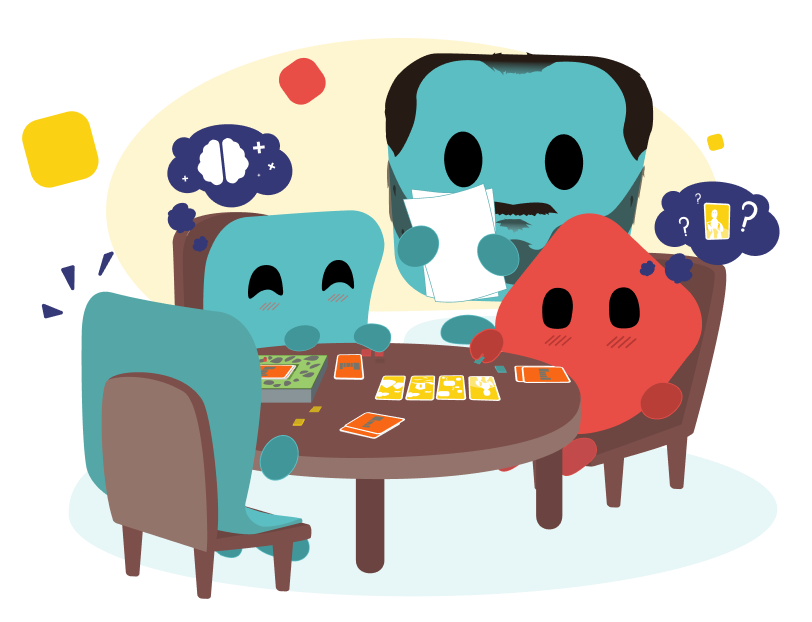
Executive functions (mental functions used to adapt to a new situation) are essential processes for children’s development, especially for children at risk of social exclusion. The main objective of this research project is to explore the extent to which an intervention based on modern board games can improve executive functions in affected children aged eight to twelve years. In particular, the researchers examine whether playing board games that appear to mobilize executive functions are more effective than games that do not. Three associations having experience with children at risk of social exclusion implemented and monitored the game intervention.
Methodology
Children at risk of social exclusion play modern board games that appear to mobilize executive functions either strongly or weakly twice a week for a period of six weeks. A pre/post-test approach is used to evaluate and compare the children’s executive performance (updating, inhibition and flexibility) and attention span before and after the intervention.
Outcomes
Regardless of whether the children played games that seem to mobilize executive functions strongly or weakly, all have better inhibition, flexibility and sustained attention after the intervention. The researchers state that this result can be explained because all board games actually mobilize basic executive functions.
News and papers
-
- Paper
Benefits of Playing at School: Filler Board Games Improve Visuospatial Memory and Mathematical Skills
-
- Paper
Do You Play in Class? Board Games to Promote Cognitive and Educational Development in Primary School
-
- Paper
The Cognitive Processes Behind Commercialized Board Games for Intervening in Mental Health and Education: A Committee of Experts
