- Project
- Completed
Narrative-based boardgames as tools for sense-making, communication and inclusion for young adults from multicultural and multisocial backgrounds

João Léste PhD Student in Design and Ergonomics
João Léste is a PhD student at the Department of Arts and Design of the Pontifical Catholic University of São Paulo (PUC) in Rio de Janeiro. He is a specialist in the ergonomics of game rule books. His research currently focuses on board games as tools for inclusion and accessibility, particularly for people with visual impairments.
-
Project start date :
2021/10/04 -
Status :
Completed -
Research organization :
PUC Rio de Janeiro, Linc-Design, NEAM -
Team :
Dr Alexandre Farbiarz, Dr Cythia Dias, Dr Guilherme Xavier, Juliana Bittencourt, Lucas Brazil, Dr Jackeline Farbiarz (PUC, Rio de Janeiro)
João Léste's project was selected in 2021, focusing on the value of narrative board games as tools for communication, inclusion, and meaning for young adult students from disadvantaged backgrounds. This initiative is part of a Brazilian federal program aimed at developing learning and development programs for young people.
Project overview
Narrative games can facilitate communication between players, and thus be used as inclusion tools. Players can talk about their personal and cultural experiences, which promotes a context of communication and openness. The objective of this research project is to encourage young adults from disadvantaged communities living on the suburbs of Rio de Janeiro and lacking access to quality public education, to share their socio-cultural origins and personal experiences through narrative board games. The project aims to give them an opportunity to integrate further in Rio de Janeiro’s academic community.
Methodology
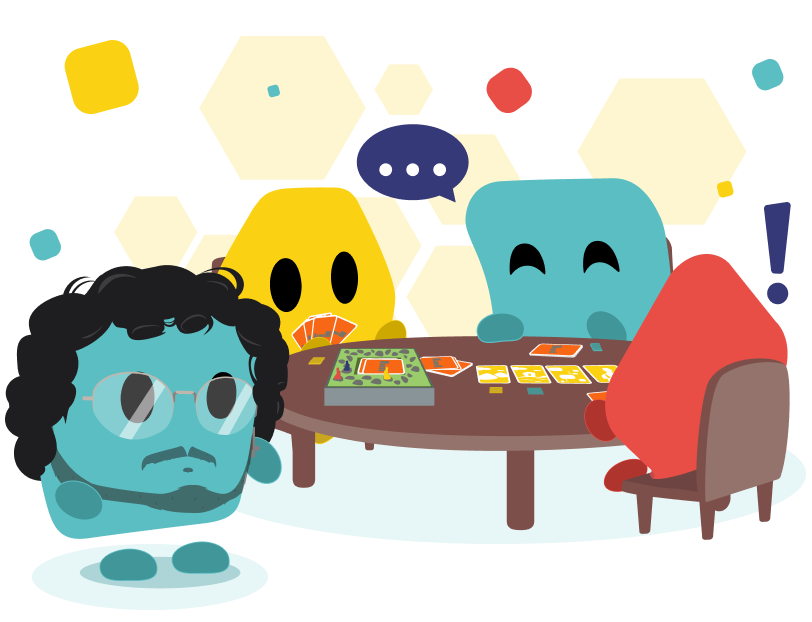
Young people from disadvantaged backgrounds play narrative games (Concept, CodeNames, Dixit, etc.) with young university graduates. Then, their impressions of the games and the evolution of their communication skills, behavior, self-perception and aspirations are analyzed.
Outcomes
The game sessions were appreciated and had a positive impact on all of the young people. The players appreciated the accessibility (simple mechanisms), sociability (as many players as possible), integration and cooperation in the games. The recent graduates played an important mediation role in accessing the game and explaining the complex rules, which supports the belief that narrative board games are useful for creating more welcoming academic environments for young people from disadvantaged backgrounds.
News and papers
-
- Paper
Analogue Game-Based Learning to Address Underemployment of People with Intellectual Disability: Resources and Best Practices
-
- Paper
Design in Partnership and Projects with High Social Impact An Experience with Games as Catalysts for a University Extension Project
-
- Paper
Current Accessibility Challenges and Perspectives for People with Visual Impairments in Tabletop Games
